By Pablo Tascon
At its core, contracted services are a formal business deal where a company brings in an external expert or team for a specific, specialized job. The entire arrangement is guided by a contract that maps out the scope, deliverables, timeline, and payment, so everyone knows exactly what to expect from day one.
Defining Contracted Services in Business
Think of it like this: if you were building your dream house, you wouldn't ask a family member to learn architecture overnight. You’d hire an expert architect. Businesses do the same thing. They use contracted services to tap into specialized skills and talent without the long-term cost and commitment of hiring full-time staff. This approach is key to staying agile, letting companies ramp up or scale down as their needs change.
Instead of paying for an employee’s time, the company is paying for a specific, measurable result. This outcome-focused model stands on three key pillars that make up any solid service agreement:
- Scope of Work (SOW): This is the blueprint for the entire project. It lays out exactly what work will be done, detailing the specific tasks, activities, and goals the provider needs to hit.
- Deliverables: These are the tangible results of the work. It could be a finished piece of software, a market research report, or a successful marketing campaign.
- Payment Terms: This section spells out how, when, and how much the provider gets paid. It might be a fixed fee, an hourly rate, or payments tied to hitting certain milestones.
This model serves as a broad umbrella, with more specific arrangements like outsourced or managed services falling underneath it.
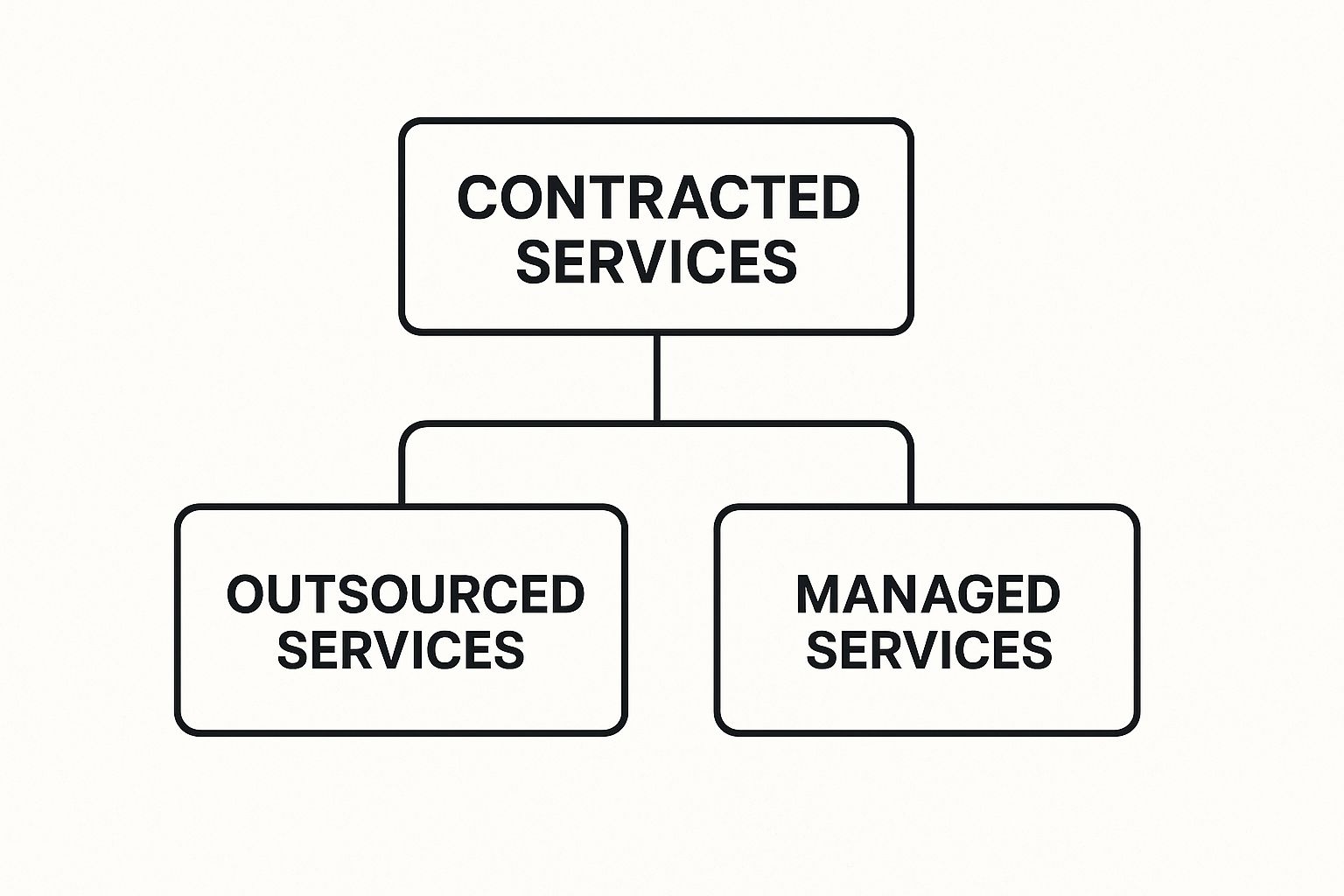
As the diagram shows, both "Outsourced Services" and "Managed Services" are distinct types of work that fit within the wider category of contracted services.
Contractor vs. Employee At a Glance
One of the most common points of confusion is the line between a contracted service provider and a full-time employee. While both work toward the company's goals, their legal and operational roles are worlds apart. Getting this wrong and misclassifying a contractor as an employee can lead to serious legal and financial trouble.
The real difference comes down to control. A business tells an employee how to do their job. With a contractor, the business only cares about what gets delivered, leaving the how up to the expert.
This isn't just a technicality; it affects everything from tax obligations and benefits to who owns the intellectual property created. The table below breaks down the fundamental differences to give corporate and legal teams a clear guide. Nailing these distinctions is the first step to using contracted services effectively while staying on the right side of the law.
| Attribute | Contracted Service Provider | Full-Time Employee |
|---|---|---|
| Control | Retains control over how the work is performed; focused on deliverables. | Subject to employer's direction on when, where, and how to work. |
| Payment | Paid per project, milestone, or on an invoice basis; no tax withholding. | Receives a regular salary or wage; taxes are withheld by the employer. |
| Benefits | Not eligible for company benefits like health insurance, retirement plans, or paid time off. | Typically receives a benefits package as part of their compensation. |
| Tools & Equipment | Uses their own tools, equipment, and resources to complete the work. | Uses company-provided equipment and resources. |
| Duration | Engagement is for a specific project or a defined period as per the contract. | Employment is generally ongoing, with no predetermined end date. |
In short, the relationship with a contractor is transactional and project-based, while employment is about ongoing integration into the company's structure and culture. Understanding this divide is non-negotiable for any business looking to build a flexible, compliant workforce.
The Anatomy of a Strong Service Agreement
A service agreement is the operational playbook for any successful partnership. It sets the rules of engagement and clarifies expectations for everyone involved. To really understand what “contracted services” are, you have to look past the initial handshake and into the architecture of the agreement itself. Think of it as a document designed to prevent conflict by creating total clarity from day one.

This agreement is more than a formality; it’s a strategic tool. A well-built contract protects both the client and the provider, making sure the work delivered lines up perfectly with the business goals. It meticulously details every crucial part of the relationship.
The Foundation: Statement of Work
At the heart of any service agreement is the Statement of Work (SOW). This is arguably the most critical component, as it lays out a highly detailed description of the specific tasks, activities, and deliverables the provider will handle. Consider it the project's constitution—it should leave zero room for ambiguity.
A vague SOW is the number one cause of scope creep, where a project’s requirements slowly expand beyond their original boundaries, leading to blown budgets and missed deadlines. For instance, a contract to "develop a mobile app" is dangerously unclear. A strong SOW would specify the platform (iOS, Android), key features (user login, payment processing), and even performance benchmarks.
Setting Standards with Service Level Agreements
While the SOW outlines what gets done, the Service Level Agreement (SLA) defines how well it gets done. An SLA establishes clear, measurable standards for performance, ensuring the quality of the work meets expectations. Without one, "good performance" is just a subjective and unenforceable opinion.
SLAs typically nail down specific metrics, such as:
- Response Time: A marketing agency guarantees it will respond to client inquiries within four business hours.
- Uptime: An IT provider ensures 99.9% server availability for a client's website.
- Resolution Time: A customer support team commits to resolving 90% of high-priority tickets within 24 hours.
These metrics transform abstract goals into concrete, legally binding commitments.
A service agreement isn't just about getting the work done; it's about getting it done right. The SOW builds the road, and the SLA installs the guardrails to keep the project on track.
Essential Clauses That Protect Everyone
Beyond the SOW and SLA, a robust agreement includes several other vital clauses that manage risk and outline the relationship's legal framework. Each one addresses a potential point of conflict before it can ever escalate.
- Payment Schedules: This clause clearly defines when and how the service provider gets paid. It specifies amounts, due dates, and payment methods, preventing any cash flow disputes down the line.
- Intellectual Property (IP) Rights: This one is crucial. It dictates who owns the final product. For example, if a company hires a developer to build an app, this clause must state that the hiring company owns all the resulting code. A fuzzy IP clause can lead to a disastrous fight over ownership.
- Confidentiality: This legally binds the service provider to protect any sensitive business information they access during the project. It’s all about safeguarding trade secrets and client data.
- Termination Conditions: This section outlines the specific circumstances under which either party can legally end the contract, such as a breach of terms or failure to meet performance standards. It provides a clear and necessary exit strategy.
Diving Into the World of Contracted Services
Contracted services are anything but a one-size-fits-all solution. Think of it as a dynamic marketplace of specialized expertise that businesses tap into every single day. Getting a handle on the different categories helps organizations strategically pull in the exact skills they need, right when they need them. These services generally fall into a few key areas, each built to tackle a distinct business function.

Each type of service fills a specific need, giving companies access to high-level talent without the long-term overhead of a full-time hire. This flexible approach is really the heart of modern business agility.
Major Categories of Contracted Services
You can break down the world of contracted services into four main domains, each with its own roster of specialists and use cases.
-
Professional Services: This is where you find the high-level expertise that requires specialized training and certification. Think of getting legal counsel from a law firm, accounting services from a CPA, or strategic financial guidance from a fractional CFO—a popular move for startups that need executive insight without the full-time salary.
-
Creative Services: These services are all about building a brand, marketing, and design. A company might bring on a marketing agency for a big product launch, hire a freelance graphic designer for a new logo, or team up with a content strategist to completely overhaul their blog.
-
Technical Services: This domain covers the technology that keeps a business running. It includes everything from managed IT support and network maintenance to specialized cybersecurity consulting to defend against digital threats.
-
Operational Services: These providers handle the essential, day-to-day functions that keep the lights on. Good examples include third-party logistics (3PL) providers who manage a company's entire supply chain or facilities management firms that oversee building maintenance and security.
The Rise of Specialized Contracted Fields
Beyond these core buckets, a few specialized fields are seeing incredible growth, proving just how vital contracted work has become for innovation and efficiency. Contract Research Organizations (CROs), for instance, are now a cornerstone of the pharmaceutical industry, managing the complex clinical trials that drug companies used to handle entirely in-house.
Temporary staffing is another area that has absolutely exploded. The global market for contract or temporary staffing hit USD 450 billion in 2024 and is on track to reach a staggering USD 780 billion by 2033. That growth points to a massive shift in how companies build their teams, choosing flexible, on-demand talent to stay nimble in a fluctuating market. These staffing agencies handle all the heavy lifting—recruitment, screening, payroll, and onboarding—so their clients can focus on their main business goals. You can dig deeper into these trends in this contract staffing services report from Business Research Insights.
The core principle is simple: instead of trying to be an expert in everything, companies can contract experts for anything. This allows internal teams to dedicate their energy to what they do best, driving growth and innovation from within.
This kind of strategic delegation isn't a niche tactic anymore; it's a mainstream business strategy. By understanding the full spectrum of available contracted services—from legal advice to logistics management—any organization can build a more resilient, skilled, and efficient operational model that’s perfectly tailored to its needs.
The Strategic Edge of Using Contracted Services
So why do so many smart companies lean so heavily on contracted services? The real answer has very little to do with simply trimming the budget. When you bring in external providers, you’re tapping into powerful strategic advantages that create a serious competitive edge. It turns what looks like a simple line item into a core driver of sustainable growth.
At its heart, using contracted services is about surgically injecting specialized expertise exactly where you need it most. Forget spending months recruiting, onboarding, and training an in-house team for a new project. You can get instant access to world-class talent ready to hit the ground running from day one.
This immediate access to specialized skills frees up your core team to focus on what they do best—driving the business forward. When your employees aren't getting bogged down by tasks outside their expertise, their productivity and innovation can really take off, leading to huge gains in operational efficiency.
Unlocking Agility and Mitigating Risk
Perhaps the biggest win here is the incredible agility and scalability that contracted services bring to the table. The business world is anything but predictable, and companies need to be able to pivot on a dime. With a network of service providers, you can scale your operations up or down almost instantly to meet market demands, all without the headaches of hiring or layoffs.
Contracted services transform a company's capabilities from a fixed, internal resource into a flexible, on-demand asset. This allows businesses to seize new opportunities and navigate economic shifts with remarkable speed.
This flexibility is also a powerful tool for mitigating risk. Trying to navigate complex regulatory environments can feel like walking through a minefield. For example, a fintech startup might bring in a compliance expert on a contract basis to guide them through intricate financial laws. This move not only keeps them on the right side of the rules but also transfers a chunk of the risk to an external specialist who lives and breathes that stuff.
Fueling Innovation Through Specialized Partnerships
In highly specialized fields, contracted services aren't just helpful—they're absolutely essential for innovation. A perfect example is the pharmaceutical industry, where contract research organizations (CROs) manage critical parts of drug development and clinical trials. The market for these specialized services was estimated at USD 79.1 billion in 2024 and is expected to climb to USD 125.95 billion by 2030. That growth is being fueled by the need to improve efficiency and manage the immense risks of bringing new medicines to market. You can dig into more data on the value of contracted research in the pharmaceutical sector.
Ultimately, managing these partnerships effectively is what unlocks their full strategic value. Strong oversight and crystal-clear communication are what turn a simple service agreement into a successful, long-term collaboration. Implementing contract management best practices ensures that every partnership aligns with your strategic goals and delivers exactly what you expect.
Navigating Critical Legal and Compliance Waters
Bringing in outside help is a smart business move, but it also means wading into some tricky legal and compliance territory. Getting these things right isn't just a job for the lawyers—it's a core part of making sure your contracted services are set up for success. One wrong step can cost you, both in fines and in reputation.

The first, and biggest, legal tripwire is the line between an independent contractor and an employee. Government agencies like the IRS have very specific tests to figure out a worker's real status. It all boils down to how much control you have over how the work gets done. If you misclassify an employee as a contractor, you could be on the hook for back taxes, hefty fines, and benefit payments.
At its core, this is all about control. If you're dictating the process, setting the schedule, and managing the methods, you're treating them like an employee—no matter what the contract says. That’s a huge red flag for regulators.
Securing Data and Privacy
In a world running on data, security and privacy aren't optional. When you hand over sensitive information to a service provider—think customer lists, financial records, or your secret sauce—your company is still the one responsible for protecting it. This makes watertight contractual clauses absolutely essential.
Your agreements need to spell out that providers must follow regulations like Europe's General Data Protection Regulation (GDPR) and the California Consumer Privacy Act (CCPA). These clauses should get specific, detailing required security measures, what to do in case of a data breach, and how they’re allowed to use the data. Dropping the ball here doesn’t just risk regulatory penalties; it can destroy the trust you've built with your customers.
Clarifying Insurance and Liability
Finally, every service agreement has to draw clear lines around liability. What happens if the provider’s work leads to a financial loss, damages property, or causes an injury? Without clear terms, you could find yourself tangled in a long and expensive legal fight.
A solid contract gets ahead of this by:
- Requiring Proof of Insurance: Make sure the provider carries the right insurance—general liability, professional liability (also known as errors and omissions), and workers' compensation.
- Including Indemnification Clauses: These are critical. They state that one party will cover the other's losses if a claim or lawsuit pops up because of the provider's screw-up.
By proactively managing contract risk, you turn your agreements from static documents into active shields. This diligence means that if something does go wrong, everyone already knows who is responsible for what, protecting your organization from nasty surprises.
From Signed Contract to Successful Partnership
Signing the contract is a milestone, but let’s be clear: it’s the starting line, not the finish. The real value in any service agreement comes from actively managing the relationship and performance after the ink is dry. This is where you shift your focus from the static contracted services definition to a dynamic, ongoing partnership.
Effective oversight is how you ensure you get exactly what you paid for. This whole process is often called contract lifecycle management (CLM), which is just a structured way of overseeing a contract from creation all the way through to completion and renewal. It means tracking performance against SLAs, keeping an eye on deadlines, and preventing what’s known as "value leakage"—the quiet financial losses that pile up from poor oversight.
Building a Foundation for Success
To turn a simple agreement into a productive partnership, you need a solid operational framework. This isn't about occasional check-ins; it requires a much more structured approach.
Proactive management starts with clear communication. Set up regular meetings and transparent reporting channels right from the get-go. This simple step ensures both sides are aligned on progress and can tackle potential issues before they snowball into serious problems. A good communication plan is your best defense against misunderstandings.
The contract sets the rules of the game, but strong relationship management is how you win. It's the difference between a transactional service and a true strategic alliance that drives business forward.
Monitoring Performance and Preventing Value Leakage
Effective contract management is quickly becoming a critical function for businesses everywhere. In fact, as of 2025, the global CLM market is growing at an annual rate of up to 15%. And yet, organizations still lose an average of 8.6% of a contract's value just from poor management. This data highlights a massive opportunity for companies to protect their investments with better oversight. For a deeper dive into how technology is shaping this field, you can review these detailed contract management statistics and trends.
To avoid becoming a statistic, you should put these best practices into play:
- Conduct Regular Performance Reviews: Schedule formal reviews to assess the provider’s performance against the agreed-upon SLAs and KPIs. Don't let this slide.
- Establish a Dispute Resolution Process: Define a clear, step-by-step process for handling disagreements constructively. This can save you from costly legal battles down the road.
- Document Everything: Keep detailed records of all communications, performance reports, and any changes to the SOW. If it isn't written down, it didn't happen.
By treating contracts as living documents, you can spot and fix potential problems early. This proactive stance on understanding the risks in contracts is essential for maintaining a healthy, productive partnership that actually delivers results.
Frequently Asked Questions
Contracted Services vs. Consulting: What’s the Real Difference?
It’s easy to mix these two up, but they play very different roles. Think of it this way: a consultant gives you the blueprint, while a contracted service provider actually builds the house.
A consultant’s job is to advise and strategize. They’ll hand you a brilliant roadmap for success. A contracted service provider, on the other hand, is the team that picks up the tools and builds that road, piece by piece. The core of the contracted services definition is this focus on execution and tangible, measurable results—not just high-level guidance.
How Do You Actually Measure ROI from a Service Provider?
Measuring return on investment comes down to tracking the right numbers—specifically, the key performance indicators (KPIs) you agreed upon in your service agreement. There’s no room for vague feelings here; it’s all about cold, hard data.
For instance, did your marketing agency promise to boost leads by 20%? Check the numbers. Did your IT provider guarantee 99.9% uptime in your SLA? Pull the logs. Quantifiable results are the only reliable way to know if your investment is paying off.
At Tascon Legal & Ediscovery, we specialize in expert support that makes your legal operations more efficient and effective. From helping you choose the right e-Discovery tools to sourcing elite legal talent, we deliver practical solutions that drive real ROI. Find out how we can help your organization at our official website.