Effective training for directors isn't a luxury anymore—it's a core business necessity for building resilience and driving growth. My focus here is to move past outdated playbooks and help you shape leaders who can navigate complexity, anticipate market shifts, and foster innovation from the top down.
Why Modern Director Training Is Non-Negotiable

The old leadership playbook is officially collecting dust. Today’s directors face a storm of challenges—from disruptive technologies to shifting regulatory landscapes—that were almost unimaginable a decade ago. Relying on past experience alone is like asking a pilot to fly a modern jetliner with just a compass and a paper map.
The tools just aren't suited for the complexity of the journey.
This is exactly why strategic training for directors has become a critical driver of an organization's success. This isn't about remedial courses or checking a compliance box. It’s a proactive investment in the very people responsible for steering the company’s future. Effective programs give leaders the modern avionics they need: strategic foresight, sharp financial acumen, and an agile mindset to lead through uncertainty.
The Widening Leadership Gap
The need for this upgraded skill set is more urgent than ever. Leadership development is a massive challenge for companies globally, with a staggering 77% of organizations admitting they don’t have enough leadership depth. This gap is made worse by declining trust, which has fallen from 46% in 2022 to just 29% in 2024.
But there's good news. Companies that invest in high-quality training see real returns, experiencing, on average, 25% better business outcomes in profitability and innovation.
In this guide, I offer a practical roadmap for designing and delivering training that builds leaders capable of turning challenges into opportunities. I'll skip the high-level theory and provide actionable frameworks to create programs that genuinely prepare your directors for the realities of modern leadership.
From Oversight to Active Guidance
The role of a director has fundamentally changed. It’s no longer about passive oversight; it’s about active strategic guidance. A well-trained board doesn't just review reports. It anticipates market shifts, champions innovation, and builds a resilient corporate culture.
To get there, training must hit a few key areas:
- Fostering Strategic Agility: Directors need to be able to pivot quickly when new data or competitive threats emerge.
- Enhancing Decision-Making: Modern training should use complex, real-world scenarios that sharpen judgment under pressure.
- Building Cohesive Leadership: A director's ability to collaborate and communicate effectively has a direct impact on the entire organization. You can learn more about the characteristics of effective teams in my related article.
An investment in director training is an investment in the organization's capacity to adapt, innovate, and thrive. It transforms the boardroom from a chamber of review into an engine of progress.
Building the Core Curriculum for Director Training
What really sets a great director apart from an average one? In my experience, it’s not just about time served; it's about having a well-rounded skill set, built with purpose. The most effective training for directors cuts through the generic leadership fluff and focuses on the actual competencies needed to steer a modern organization.
The aim is to create a blueprint for excellence, concentrating on the pillars that support sharp, strategic decision-making. These aren't just isolated skills—they’re interconnected abilities that work together. They form the bedrock of a truly world-class training curriculum.
Strategic Foresight and Vision
The first pillar is Strategic Foresight and Vision. This is the knack for looking past the next quarter's results to see the bigger picture, spotting market shifts before they turn into full-blown disruptions. It’s about training directors to connect the dots between seemingly unrelated trends and grasp their long-term impact on the business.
Think of it like a ship's captain. They don't just stare at the waves right in front of the bow; they study weather patterns, ocean currents, and distant storm clouds. This foresight helps them chart a course that steers clear of danger while catching favorable winds. Training should give directors that same ability for their organization.
To build this competency, I advise that training should focus on:
- Scenario Planning: Thinking through multiple potential futures and building a game plan for each one.
- Competitive Analysis: Digging deeper than just tracking competitors to truly understand their underlying strategies and weak spots.
- Innovation and Disruption: Spotting new technologies and business models that could completely reshape the industry.
Financial Acumen and Governance
Next up is Financial Acumen and Governance—a skill that is absolutely non-negotiable for any director. This goes way beyond just reading a balance sheet. It means having a deep, intuitive grasp of the company's financial drivers, how capital is allocated, and the core principles of solid corporate governance.
A director with strong financial sense can ask the tough questions that protect shareholder value and ensure the company’s long-term health. They get how operational choices hit the bottom line and can hold management’s feet to the fire on performance. This pillar ensures that big strategic dreams are firmly tethered to financial reality.
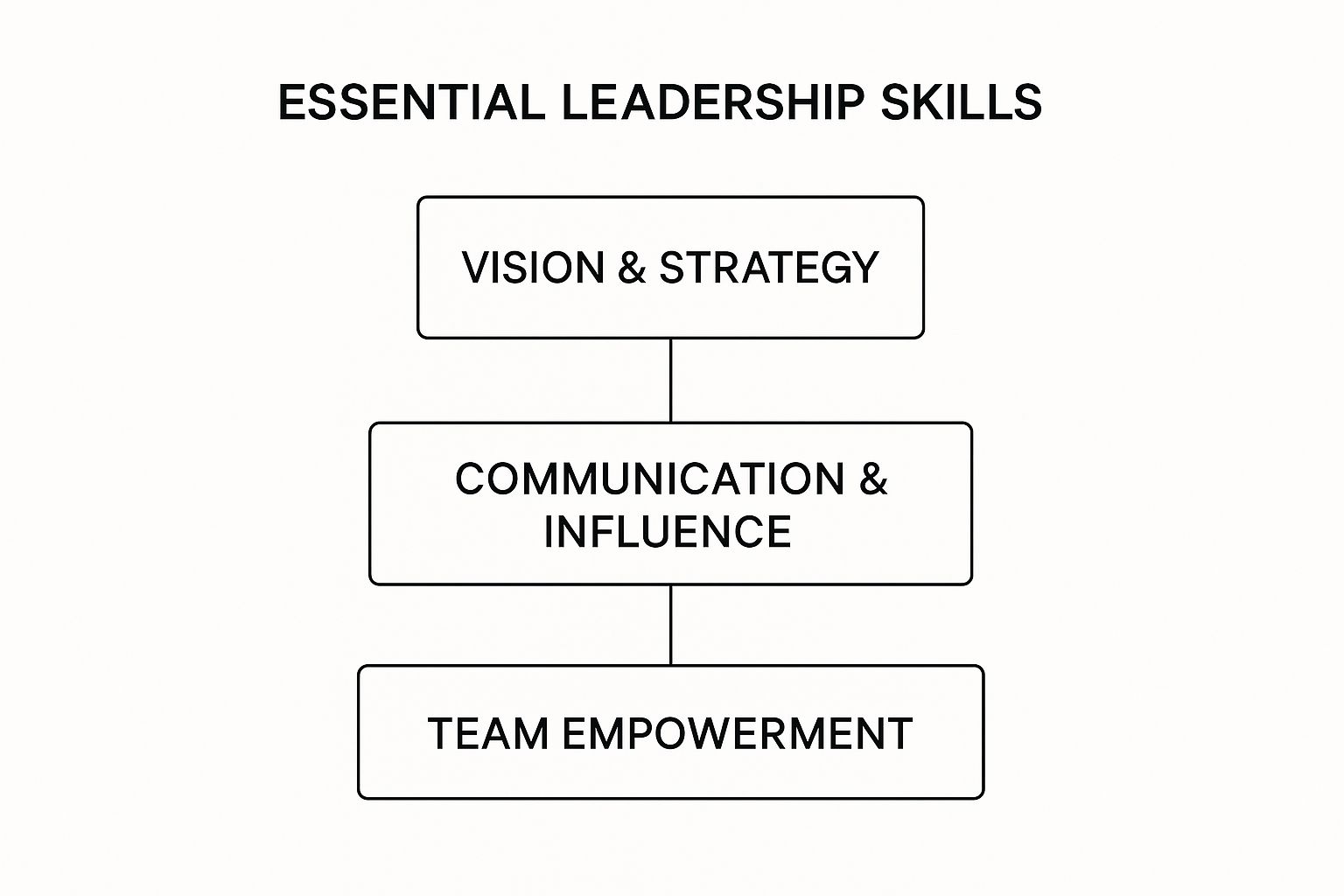
This image illustrates how high-level skills like vision and strategy are built on a solid foundation of team empowerment and clear communication. Empowering teams is the essential base layer that enables the influence needed to execute a powerful strategic vision.
Risk and Compliance Oversight
The third critical pillar is Risk and Compliance Oversight. With today’s complex legal and regulatory environment, directors have to be vigilant guardians of the organization's integrity. That means not only understanding the rules of today but also anticipating the compliance headaches of tomorrow.
Effective training here shifts a director’s mindset from reactive box-checking to proactive risk management. It prepares them to identify, assess, and mitigate risks across the entire business, from cybersecurity threats to supply chain vulnerabilities.
A director's role isn't to eliminate all risk—that's impossible. It is to ensure the organization takes the right risks, intelligently and with full awareness of the potential consequences.
People-First Leadership
Finally, the curriculum has to be anchored in People-First Leadership. A director's influence reaches far beyond the boardroom. Their decisions shape corporate culture, employee morale, and talent retention. This pillar is all about the "soft skills" that deliver hard results.
This includes mastering succession planning, championing diversity and inclusion, and understanding the nuts and bolts of effective executive compensation. Great directors know that a company's most valuable asset is its people. Training should reinforce their crucial role in nurturing that asset for sustainable growth.
The table below offers a clear blueprint for structuring a director training program around these four foundational pillars. It maps out the learning objectives and key topics needed for a curriculum that truly delivers.
Core Competencies for Director Training Programs
| Training Pillar | Primary Objective | Key Training Topics |
|---|---|---|
| Strategic Foresight and Vision | Develop the ability to anticipate market trends and guide long-term organizational strategy. | Scenario planning, competitive intelligence, identifying disruptive technologies, and strategic decision-making frameworks. |
| Financial Acumen and Governance | Ensure a deep understanding of financial statements, capital allocation, and corporate governance principles. | Financial analysis for non-financial leaders, M&A evaluation, shareholder value creation, and board governance best practices. |
| Risk and Compliance Oversight | Cultivate a proactive mindset for identifying, assessing, and mitigating organizational risks. | Cybersecurity risk for boards, regulatory compliance updates, crisis management simulation, and ESG (Environmental, Social, Governance) oversight. |
| People-First Leadership | Strengthen skills in talent management, succession planning, and building a high-performance culture. | Executive compensation strategies, diversity and inclusion initiatives, succession planning models, and fostering board-CEO alignment. |
By building a curriculum around these core competencies, you create a training program that doesn't just inform directors—it transforms them into more effective leaders.
How to Deliver Training That Actually Sticks
Knowing what to teach directors is only half the battle. The real challenge is making sure those lessons actually translate into action when the pressure is on. Traditional, one-size-fits-all training often falls flat because it completely ignores the experience and demands of seasoned leaders. To make new skills stick, we have to move beyond passive lectures and create learning experiences that are both immersive and practical.
Think of it like the difference between a generic workout video you find online and a personalized fitness plan from a coach. The video gives you some basic moves, but the custom plan is built around your specific goals, fitness level, and lifestyle. The result? A routine you’ll actually follow because it’s for you. The same exact principle applies to high-level training for directors.
Experienced leaders don’t need a refresher on business basics. They need targeted insights and practical tools they can put to use immediately on complex, high-stakes problems. That's where customized learning paths come in.
Embracing the Blended Learning Model
The most effective programs today are built on a blended learning model. This approach combines the flexibility of self-paced digital courses with the collaborative punch of live, interactive sessions. It’s the best of both worlds, respecting a director’s packed schedule while still creating deep, meaningful engagement.
Digital learning isn't just a trend; it's a core part of modern professional development. In fact, corporate eLearning has become almost universal, with 98% of corporations now using it. The market, valued at a massive $245.5 billion in 2022, is expected to soar to $462.6 billion by 2027. Why the boom? Because 61% of L&D professionals say their top priority is closing skills gaps. You can find more research on these corporate eLearning trends on Continu.com.
So, what does a blended model look like in action?
- Self-Paced Modules: Directors can cover foundational concepts—like new regulatory frameworks or financial modeling techniques—whenever it fits their schedule.
- Live Workshops: This is where the magic happens. These sessions are reserved for high-value activities, like debating tough case studies, running strategic planning exercises, or hearing directly from industry experts.
- Peer Coaching: Small groups of directors can be tasked with solving real business problems together, sharing their unique experiences and holding each other accountable.
This structure respects a director's time while making sure any in-person or virtual collaboration is as impactful as possible.
Moving from Theory to Practice
Abstract theories don’t change behavior—hands-on application does. For training to stick, it has to be grounded in reality. It needs to force directors to grapple with the same kinds of messy, high-pressure situations they face every day in the boardroom.
The goal of director training isn't just to impart knowledge. It's to build muscle memory for sound judgment and decisive action when the stakes are highest.
This is where immersive learning techniques are so powerful. They create a safe space for leaders to experiment, make mistakes, and sharpen their skills without any real-world consequences. These hands-on methods are far more memorable and effective than just sitting through another presentation.
High-Impact Immersive Techniques
If you want to build skills that directors can apply the very next day, I recommend integrating these powerful methods into your program:
-
Realistic Crisis Simulations: Put directors right in the hot seat. Simulate a PR disaster, a major cybersecurity breach, or a sudden market collapse, and task them with managing the fallout in real-time. This builds resilience and sharpens decision-making under fire.
-
Board-Level Case Studies: Forget the generic textbook examples. Use complex, real-world case studies that mirror the specific challenges your industry and organization are facing. This lets directors dissect strategic decisions and their consequences in a relevant context.
-
Mentorship Circles: Pair seasoned directors with newer board members or high-potential executives. These structured relationships are a powerful way to transfer institutional knowledge, share nuanced insights, and build a stronger leadership pipeline for the future.
When you combine these hands-on methods with a flexible, blended delivery model, you create a learning environment where new skills aren't just learned—they're internalized and ready to be deployed immediately.
Using AI and Technology to Sharpen Leadership Skills

Technology isn’t just for running the business anymore; it’s become a powerful engine for leadership development. For directors, this means looking beyond spreadsheets and embracing systems designed to sharpen their most critical skills. Modern platforms now create personalized, data-driven learning journeys that were once impossible to scale.
This isn't about chasing the latest trend. It's about using intelligent tools to build skills in areas that truly matter today—like data analysis, digital transformation, and high-stakes strategic decision-making. These technologies make director training more efficient, relevant, and impactful.
Personalized Learning at Scale
Artificial intelligence is changing the game for executive education. AI-powered platforms can now analyze a director's existing competencies, pinpoint specific skill gaps, and then curate a custom-built learning path to fill them. This makes sure every minute of training is relevant, which is crucial for time-strapped senior leaders.
Imagine a system that flags a module on cybersecurity risk after noticing a director’s limited engagement with the topic in board materials. Or one that serves up a simulation on M&A negotiations based on the company’s upcoming strategic goals. That level of personalization makes every learning moment count.
The Power of Leadership Simulations
One of the best uses of technology in training for directors is the rise of complex, realistic simulations. These exercises put leaders in the middle of the high-stakes, ambiguous challenges they face in the real world, but in a safe environment where they can practice and sharpen their judgment.
These aren't your basic multiple-choice quizzes. I'm talking about advanced simulations that can replicate incredibly complex scenarios, such as:
- Navigating a sudden supply chain collapse.
- Responding to an aggressive activist investor campaign.
- Making tough capital allocation decisions with incomplete information.
By running these simulations, directors see the direct consequences of their choices, learn from missteps, and build the muscle memory to lead decisively when a real crisis hits. That kind of hands-on experience sticks with you far longer than any textbook lesson.
Technology transforms training from a passive transfer of information into an active, adaptive experience. It allows leaders to practice making difficult decisions under pressure without real-world risk.
The rise of AI-powered leadership methods has been shown to increase the speed of skill acquisition by 20%, offering a modern, efficient path to develop director competencies. This is especially vital given that externally hired leaders are 61% more likely to fail within 18 months compared to internal promotions, putting a high value on effective internal director training. You can explore more eye-opening leadership development statistics on Exec.com.
Real-Time Feedback and Coaching
New technologies also deliver another huge advantage: immediate, data-backed feedback. AI coaches can provide real-time support during decision-making exercises, while virtual reality (VR) can be used for practicing a high-stakes presentation to a simulated board—complete with feedback on tone, body language, and clarity.
This instant feedback loop shortens the learning curve dramatically. Directors no longer have to wait for an annual review to figure out where they need to improve. Technology provides continuous, objective insights, helping leaders sharpen their skills on an ongoing basis and stay ahead of the curve.
Training for Tomorrow's Business Challenges
The skills that made a great director just five years ago are quickly becoming table stakes. In a world of market volatility, rapid-fire tech changes, and new societal expectations, the director's role has fundamentally shifted. It’s no longer about passive oversight; it's about active, forward-looking strategic guidance.
This evolution demands that training for directors also looks ahead, preparing them for the challenges on the horizon, not just the ones they’re grappling with today. The goal is to build an agile board—one that can steer the organization through unprecedented complexity with confidence and foresight.
The New Table Stakes for Directors
A few key areas have emerged as non-negotiable for modern boards. These aren’t niche specializations anymore; they are now central to effective governance and creating long-term value. A director who isn't fluent in these domains is a strategic liability.
Here are the competencies that I believe matter most now:
- AI Implementation Oversight: Directors don't need to be data scientists, but they absolutely must grasp the strategic implications of artificial intelligence, from how it can drive efficiency to its ethical minefields.
- Cybersecurity Risk Management: Threats are getting more sophisticated and severe by the day. Directors must be able to ask the right, tough questions about the company’s security posture and its ability to bounce back from an attack.
- ESG Initiative Leadership: Environmental, Social, and Governance factors are no longer a footnote. They are core to business strategy, influencing everything from brand reputation and talent acquisition to investor confidence.
Mastering these domains is essential for providing sharp, relevant oversight. For instance, a solid understanding of legal operations can dramatically improve how a board manages both technological and regulatory risks. My guide to legal operations management offers more context on this critical function.
From Passive Oversight to Active Guidance
The boardroom is no longer a place for simply reviewing last quarter's performance. It’s the hub where future direction is shaped. This means directors need to roll up their sleeves and actively engage with management on how to navigate technological disruption and market uncertainty.
This shift is already visible in board recruitment. Companies are hunting for directors with specific, future-focused skills. A recent survey found that 43% of private companies now view expertise in AI and emerging tech as a must-have for new board members. That number tells a clear story: leaders need to be trained to oversee digital transformation, and they need that training now. You can explore the full findings on director competencies on NACDonline.org.
The modern director must be a navigator, not just a passenger. Their role is to help chart the course through ambiguity, using foresight and strategic insight to turn potential disruptions into competitive advantages.
This active role demands a real commitment to continuous learning. The skills that are critical today will almost certainly be outdated in a few years, making ongoing development a core responsibility of directorship itself.
Building a Culture of Continuous Learning
A forward-thinking board knows that its own development is a strategic asset. To stay ahead of the curve, organizations have to build a culture where learning isn't just encouraged at the top—it's expected. This means moving beyond the occasional, one-off training session and creating a sustained program of development that keeps the board sharp.
Here are a few practical ways I’ve seen work to build this culture:
- Schedule Regular "Future-Focus" Sessions: Carve out time in board meetings specifically to discuss emerging trends, technologies, and market disruptions that aren't on the immediate agenda yet.
- Bring in External Experts: Invite specialists in fields like AI, cybersecurity, or ESG to give targeted briefings. The goal is to challenge the board’s existing assumptions and bring fresh perspectives into the room.
- Encourage Peer-to-Peer Learning: Create forums where directors can share insights from their own industries and areas of expertise. This cross-pollination of ideas is invaluable.
By weaving learning into the board's regular rhythm, you ensure your leadership team remains agile, informed, and ready for whatever comes next. This commitment isn't just a "nice-to-have"; it's the ultimate safeguard against strategic stagnation.
Measuring the True Impact of Director Training
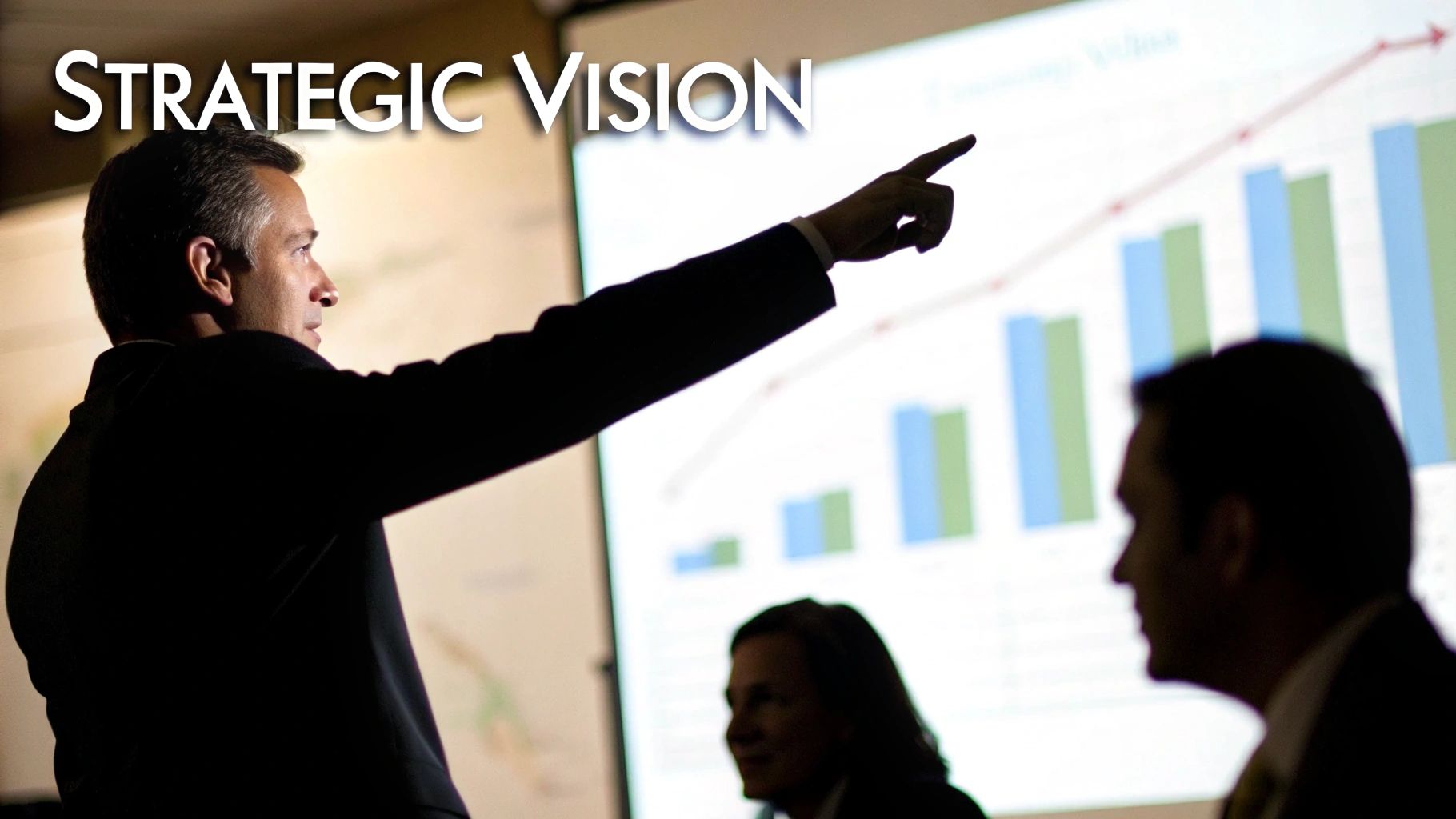
So, how do you prove that investing in training for directors is actually paying off? Course completion rates are easy enough to track, but they tell you nothing about real-world impact. To justify the time and money, you have to shift your focus from tracking activity to evaluating tangible business outcomes.
This means zeroing in on the right key performance indicators (KPIs)—the ones that draw a direct line between director development and the overall health of the organization. It’s a business-first approach that reframes training from a line-item expense into a strategic investment with measurable returns.
The real value isn’t found in a certificate of completion. It’s seen in the improved performance of the entire company.
Moving Beyond Simple Metrics
To measure what really matters, you need to look for shifts in high-level business functions. These are the indicators that reflect a more capable, strategic, and aligned leadership team.
Here are the key areas to watch:
- Faster, Better Decision-Making: Start tracking the time it takes for the board to reach a consensus on critical strategic moves. Well-trained directors can cut through complexity, analyze information, and align on a course of action far more efficiently.
- Improved Business Outcomes: This one’s straightforward. Correlate your training periods with improvements in key financial metrics like revenue growth, profit margins, or even market share.
- Stronger Succession Pipelines: One of the best outcomes of effective training is identifying and nurturing future leaders from within. Keep an eye on the percentage of senior roles being filled by internal candidates.
This focus on outcomes proves that the skills learned in the training room are being applied to solve actual business challenges. You can also see how specialized knowledge directly impacts business resilience in my article on legal risk management in eDiscovery.
Calculating the Return on Investment
Calculating the ROI comes down to linking training directly to productivity and financial gains. Training programs, especially those built on eLearning, often deliver a surprisingly strong financial benefit.
In fact, 42% of companies report a direct increase in revenue after enhancing workforce performance with these programs. IBM’s own analysis found that every dollar invested in online training can yield about $30 in increased productivity, simply because it speeds up how quickly new skills are put to use. For more insights, check out these corporate elearning statistics on continu.com.
Training for directors is not an expense; it’s a strategic investment that delivers tangible dividends in performance, stability, and growth. When leaders improve, the entire organization reaps the benefits.
Ultimately, the goal is to show a clear connection: a more skilled and aligned board leads to a more resilient and profitable company. By measuring the right KPIs, you can build a powerful, undeniable business case for continuous leadership development.
Your Top Questions About Director Training, Answered
When it comes to putting director development into practice, a lot of specific questions come up. Let's tackle some of the most common ones I hear from organizations trying to build stronger leadership in the boardroom.
These aren't just textbook answers; they're my practical insights to help you navigate the real-world challenges of upskilling your company's most important leaders.
How Often Should Directors Receive Training?
There’s no magic number here, but the old model of a single annual training day is dead. Today’s most effective boards operate on a continuous learning model, where development is an ongoing activity, not a once-a-year event.
This doesn't mean you need to schedule week-long seminars every month. Think of it more as a blended, year-round schedule that fits into the board's existing rhythm:
- Quarterly Deep Dives: These are focused workshops or simulations on pressing topics like ESG oversight, new technology, or shifting competitive landscapes.
- Monthly Briefings: Think short, expert-led sessions on emerging market trends or critical regulatory updates that directors need to know now.
- Ongoing Access: A library of self-paced digital resources is a must. This lets directors pull information on-demand when they need it most.
This approach keeps the board sharp and informed without completely overwhelming their calendars.
The goal is to weave learning directly into the board's regular operations. When development becomes a consistent habit rather than an isolated event, your leaders will stay current in a business environment that’s always in motion.
How Do You Get Buy-In From Senior Leadership?
Getting senior leaders on board—including the directors themselves—is all about framing the training as a strategic investment, not a line-item cost. You need to present a clear business case that ties the program directly to the organization's goals and performance metrics.
Focus on outcomes, not activities. Instead of talking about course modules, talk about strengthening the company’s ability to manage cybersecurity risk or accelerate entry into a new market. Use data to show how well-trained boards drive better financial performance, build stronger succession pipelines, and provide more robust oversight.
What's the Difference in Training New vs. Experienced Directors?
The main difference comes down to focus and delivery. Both new and seasoned directors need development, but their needs are worlds apart. A one-size-fits-all program is almost guaranteed to miss the mark with both groups.
-
For New Directors: The training needs to be all about foundational knowledge and acculturation. The curriculum should cover the essentials: corporate governance, the basics of financial oversight, company strategy, and the specific dynamics of your board. The objective is to get them up to speed quickly so they can start contributing in a meaningful way from day one.
-
For Experienced Directors: Here, the focus shifts to strategic foresight and adapting to change. These leaders get the most value from advanced, forward-looking topics. Think about sessions on AI's impact on strategy, navigating complex geopolitical risks, or leading through major industry disruptions. The format should be peer-driven and highly collaborative, designed to draw on their deep well of experience.
By respecting these differences, you create a training experience that’s far more relevant and impactful for every single person in the boardroom.
At Tascon Legal & Ediscovery, my team and I specialize in delivering targeted training designed to upskill legal and executive teams for today's complex challenges. From platform rollouts to advanced e-Discovery protocols, we provide end-to-end support that reduces risk and makes your team more effective. Learn how we can build a program for you at https://tasconlegal.com.